We built a news feed. The part worth keeping was the checking.

Anomaly began in Berkeley in 2026 as a news feed for people who wanted to see the sourcing. For each story it showed which outlets covered it and how their framing differed, and it said whether code or a model had written each line. The engine behind it read more than 430,000 items before its pipeline stopped in July 2026 and ran in production, invite-only. It never found a real audience. What it had was a rule: nothing goes on screen that cannot be traced to a stored source.

Then we built Lineage, the same rule applied to American foreign policy, checked against public archives such as the Foreign Relations of the United States series, the National Archives, govinfo, the Miller Center, the Avalon Project and Chronicling America. A model proposes claims; code finds each quote in the stored text or quarantines the claim; relations between sources carry their own checked quotes. On 29 October 2026 the store held 289 public-domain documents from those archives. Across the whole development corpus, which also includes copyrighted collections stored so quotes can be checked and never redistributed, the engine held 19,647 claims admitted by the check and 10,792 proposals the check refused, and all 26,351 stored quotes re-checked clean against their sources. No person has reviewed a single one yet.

Somewhere in that work the shape of the company changed. The people who most need an engine that refuses to show what it cannot trace to a stored source are the ones training and evaluating models. They pay for rewards they can check, and they have none for writing or for evidence. In October 2026 we paused the feed and turned the engine toward them. In November we put people at its center: students correct what models get wrong or slant, and a professor rechecks every item. We have no customers yet. When we can fund it, the feed returns as open data for anyone.
Why labs

Code has a verifier. Writing does not.

“[R]eward signals that make models good at code actively flatten voice and style.”

Jared Friedman, Y Combinator, Requests for Startups, Winter 2027, announced 27 October 2026.Source 1 The item says the regression appears to be structural and that, forced to choose, the big labs will pick coding over style.

Code and math have verifiers: a test passes or it does not. Lab budgets followed. Scale AI says nearly half of its new data projects involve reinforcement learning environments.Source 2 Writing and reasoning over evidence have no verifier. Whether a sentence is good, whether a claim is supported by its source, what an account leaves out: all of it is graded by rubric and opinion, so models learn to sound right rather than to be right.

Newsrooms built a discipline for this a century ago. A reporter sources every line, an editor cuts what the source does not support, and a correction runs in public when something slips through. Labs are starting to notice. In October 2026 a reporter wrote that a data vendor working with eight labs had called the trail from draft to published to correction “the single most useful thing a newsroom holds,”Source 3 and wanted documents that contain conflicting information. The industry still buys that text as raw content rather than as the labeled signal it is.

Anomaly makes the discipline itself the data. We flag answers where models disagree or slant a story. A student corrects the answer on the exact words, notes how it is framed, and backs each point with a line highlighted in a source; code checks that the line is quoted word for word, or it cannot be used. The student writes the test any good answer must pass and judges each model’s second try. A professor rechecks the finished item and approves it or sends it back. Citing a source becomes a check that code can run. Whether the source supports the claim, and whether the framing is fair, stays a judgment a person makes. On 16 November 2026 the desk is in build and no item has been reviewed.

  • 74.2%

    The best Grounding v2 score in Google’s FACTS Leaderboard paper. The benchmark asks whether an answer stays inside the document it was given. The automated judges behind that score reach only about 65 macro-F1 against human raters, a middling agreement score for a grader. In a newsroom that grader would be called an editor, and its verdicts would be checked by hand.FACTS Leaderboard Suite, December 2025.Source 4

  • 43%

    The automated judge behind EQ-Bench, a popular AI writing leaderboard, agreed with expert writers as little as 43% of the time in Surge AI’s analysis. A grade no writer checks is a grade a model learns to game.Surge AI, Hemingway-bench, 4 February 2026, updated October 2026.Source 5

  • 959

    Court decisions, out of 2,262 involving AI-hallucinated content, in which a filing cited a real source for something it did not say. The source was real; what the filing said about it was not. An existence check cannot catch that. A reviewer reading the claim beside the passage can, and that correction is kept as a labeled example beside the original.Damien Charlotin, AI Hallucination Cases database, as of 2 November 2026.Source 6

  1. Y Combinator, Requests for Startups, Winter 2027: LLMs That Write Well, announced 27 October 2026.
  2. Scale AI, on reinforcement learning environments, 2026.
  3. An AI company wanted to buy my reporting notes, Columbia Journalism Review, October 2026, quoting a Handshake AI licensing message; the article says Handshake works with eight AI labs.
  4. The FACTS Leaderboard, arXiv 2512.10791, December 2025; Grounding v2 column and judge agreement.
  5. Hemingway-bench: the AI writing leaderboard judged by expert writers, Surge AI, 4 February 2026.
  6. AI Hallucination Cases, Damien Charlotin, updated 2 November 2026; “Misrepresented” category.

What we make

Items a lab can train on, each one approved by a professor.

Every item is one question, the models’ answers and the work a student did on them. Labs can use it to fine-tune, to train preferences and to evaluate. None has shipped yet. Each row says where it stands on 16 November 2026.

Corrections and notes

Each mark sits on the exact words of a model’s answer: a correction with its fix, or a note on framing, emphasis, loaded words or what was left out. A note on framing is kept as one named person’s view, never as the answer. A correction is kept beside the original, so the pair can be learned from.

In build. The first pass starts in late November.

Proof

The line from a source that backs each point, with its source and place, quoted word for word and checked by code. Public-domain sources are stored in full. Copyrighted text is stored so quotes can be checked and is never redistributed; nothing we ship carries more than a quote of at most forty words.

The quote check runs today.

The test

What any good answer to the question must say and must never say. A model drafts it from the student’s notes and labels it a draft; the student edits and accepts it. It works as a key any later answer can be graded against.

In build.

Second tries

Each model gets its own answer back with the marks and tries again. The student judges each rewrite: fixed it, kept what was right, went too far, or ignored it.

In build.

Sign-off

A professor rechecks each finished item on one short page and approves it or sends it back with a note. Approved items are pushed with who did what, and when.

First session planned for December.

Method

How an item becomes data: six steps, two of them gates.

Four steps build the item. Two are gates: Prove, held by code, and Approve, held by a professor. Nothing reaches a lab without passing both.

  1. Flag

    Our systems flag answers where the models disagree with each other or with the record, or all get it wrong or slant it the same way. Until those flags are built, we pick each item by hand and write down why it is there.

  2. Correct

    A student reads the full answers, with the models’ names hidden, and marks the words: a correction, a note on framing, right, or not sure. Nothing else is required.

  3. Prove Gate

    The student backs each correction or note by highlighting the line in a source that shows it. Code checks the quote word for word against the stored copy; a line it cannot find cannot be used.

  4. Test

    A model drafts the test from the student’s notes: what any good answer must say and must never say. It stays labelled as a draft until the student edits and accepts it.

  5. Try again

    Both models get their answers back with the marks and try again. The student judges each rewrite, then sends the item to the professor.

  6. Approve Gate

    A professor rechecks each finished item on one short page and approves it or sends it back with a note. Only approved items are pushed, and nothing is marked verified until a person approves it.

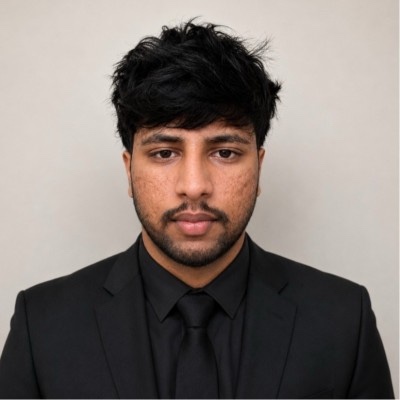
Yeshasvi Kamma

Co-founder. Engineering and research.

Studies applied mathematics and computer science at UC Berkeley, graduating in 2027. Does machine-learning research at NASA Ames Research Center on the agency’s Open Science Data Repository (OSDR), its space-biology corpus: works with NASA scientists on a foundation model for the biosciences, and built a metadata engine that rebuilds verified, ML-ready OSDR records with provenance tracking.

Software engineer at Yottasecure, a real-time AI cyber-defense startup, since May 2025. Wrote Anomaly’s intake engine and the Lineage verifier as the only human author, with coding agents doing much of the typing and none of the deciding, and reviews every change before it merges.

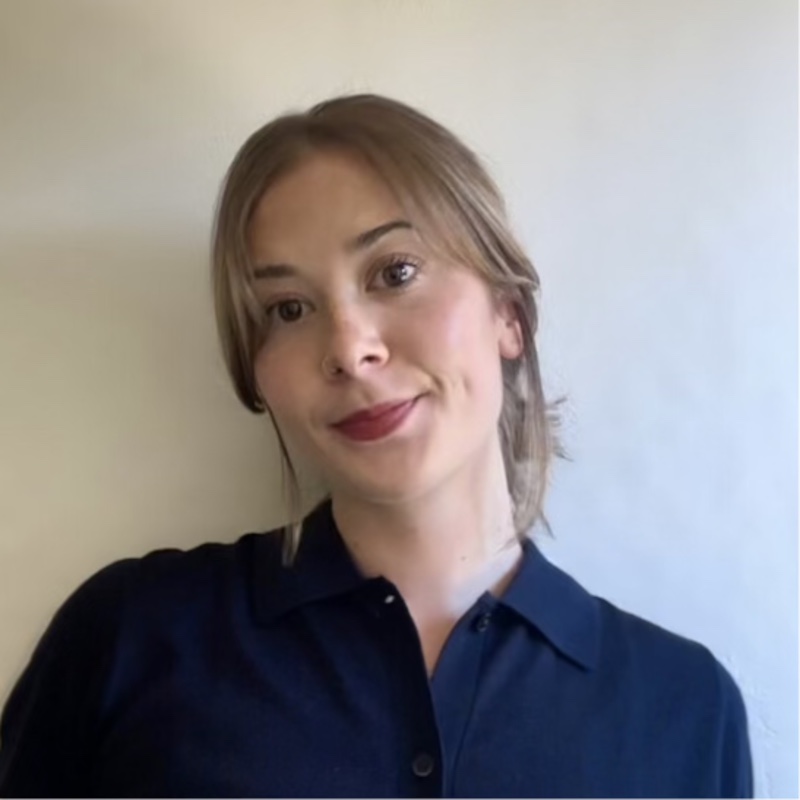
Sophia Muck

Co-founder. Media, policy and growth.

Studies media law and policy at UC Berkeley, with an undergraduate certificate in new media, and is a member of the Student Innovation Fellows program at Berkeley’s Sutardja Center for Entrepreneurship and Technology. Works as media assistant for Berkeley’s Management, Entrepreneurship and Technology program, supporting its media and digital strategy.

As executive director of marketing for Her Campus at Berkeley, she directed social content for brands including Valentino and Mugler and used performance analytics to more than double the chapter’s TikTok views and likes in a semester. Before that she edited short-form video for a 2026 gubernatorial campaign, and at InReach, a nonprofit that connects LGBTQ+ people to resources, designed for accessibility and ran digital campaigns. She holds an SEO and data-analysis certification from Ahrefs and won nine best-speaker awards as a Toastmasters club officer.

At Anomaly she works on the media-law and policy questions the product turns on, what text can be stored, quoted and licensed, and owns the audience and growth work.

How we work

Four rules we do not break.

  • 1

    Nothing invented renders as real. No made-up events, dates, quotes or counts. When something is missing, the page says so.

  • 2

    Every number we publish carries a source and a date. If we cannot re-verify it, we take it down.

  • 3

    Code checks quotes; people judge meaning. We never call a claim verified because a model said so, and we never call it verified until a person has.

  • 4

    Public-domain archives are stored in full. Copyrighted text is stored so quotes can be checked, and is never redistributed: nothing we publish or ship carries more of it than a quote of at most forty words.

Write to us

We are looking for two design partners.

We have no customers, and we are not going to pretend otherwise. If you run post-training, evaluation or human data at a lab, we will walk you through an item at the desk, send you the first approved items, and listen to where they fall short.

Write to us